
Quick Answer
IV therapy dehydration fatigue is one of the most common reasons patients come to Vita Nova. The two symptoms feed each other — even mild dehydration (1–2% body weight loss) impairs energy, mood, and cognition; chronic fatigue suppresses thirst cues and makes adequate fluid intake harder. IV rehydration with electrolytes addresses the dehydration directly in 30–60 minutes; a Myers’ Cocktail adds B-complex, B12, and magnesium for the fatigue side. Both are physician-supervised at Vita Nova Canton with RN administration. Book a consultation or call (443) 563-1059.
Medically Reviewed by Dr. Brijen L. Joshi, MD · Medical Director, Vita Nova Ketamine & Wellness Clinic · Updated · 8 min read
If you’re searching for IV therapy dehydration fatigue, you’re almost certainly dealing with both at once — and they amplify each other in ways most people don’t fully appreciate. This guide covers the physiology of why dehydration causes fatigue, why fatigue worsens dehydration, when IV rehydration is the right tool, and how to tell whether the symptoms point to something else that needs proper medical workup.
In This Guide
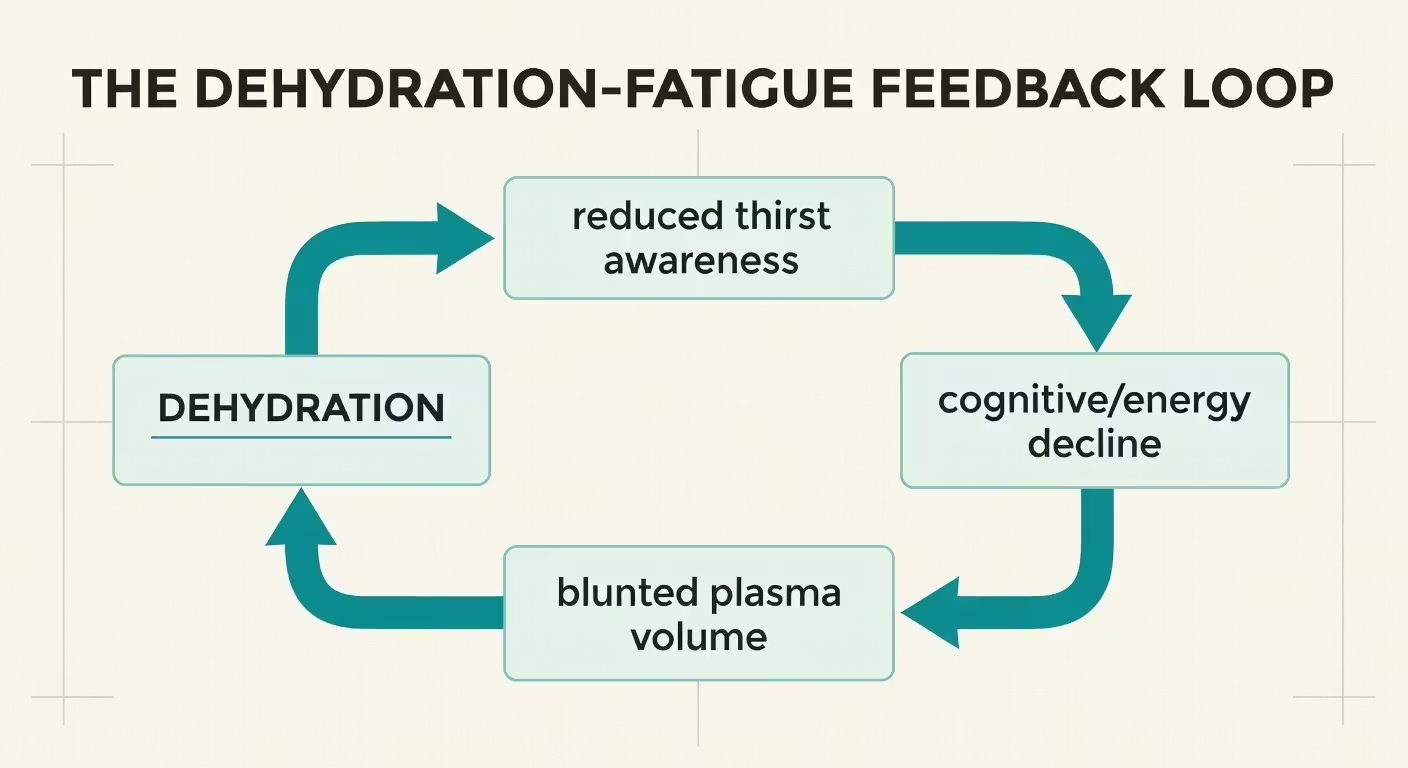
The Dehydration-Fatigue Feedback Loop
Why IV therapy dehydration fatigue patients often have both at once — these symptoms genuinely amplify each other:
How dehydration drains energy
Even a 1–2% body-weight fluid deficit reduces plasma volume, increases heart rate, and lowers stroke volume — making routine activity feel harder. Cleveland Clinic on dehydration covers the symptom cascade, and Mayo Clinic on dehydration covers diagnostic context. Studies indexed in a PubMed Central review on dehydration and cognition document measurable cognitive and mood impacts even at mild fluid deficits.
How fatigue worsens dehydration
Fatigue blunts thirst signals; tired people drink less, eat less hydrating food, and skip preparation routines. Johns Hopkins on chronic fatigue syndrome covers fatigue’s downstream behavioral effects. The loop compounds over days or weeks until a hard “crash” forces attention.
Recognizing IV Therapy Dehydration Fatigue Symptoms Together
Clues that fatigue has a dehydration component IV therapy dehydration fatigue can address:
- Dark or infrequent urine — fewer than 4–6 voids per day, deeply yellow
- Headache that improves with water
- Postural lightheadedness on standing
- Sluggishness peaking late afternoon after a day of inadequate fluid intake
- Dry mouth, dry eyes, dry skin
- Recent illness, hot weather, alcohol, or intense exercise — American College of Sports Medicine on hydration covers exercise-related fluid loss
If you check several of these and your fatigue improves substantially with adequate fluids, the dehydration component is real. IV therapy dehydration fatigue protocols at Vita Nova can shortcut the rebound from days to about an hour for most patients.
IV Protocols for Both Symptoms
Three protocols cover the most common IV therapy dehydration fatigue scenarios:
Hydration Boost IV — $149
Saline plus electrolytes (sodium, potassium, magnesium). The cleanest fit when dehydration is the dominant driver and you mostly need volume back. ~30–45 minute infusion. Hydration IV details →
Myers’ Cocktail — $199
Hydration plus B-complex, B12, magnesium, calcium, and vitamin C. When fatigue is doing the heavier lifting and you want micronutrient support along with rehydration. NIH ODS magnesium fact sheet covers magnesium’s role in cellular energy. See our overview Myers Cocktail IV Therapy in Baltimore.
Hydration + B12 IM shot — $149 + $35
A budget-friendly hybrid: clean rehydration via IV plus a B12 IM injection for the fatigue side. NIH ODS B12 fact sheet covers candidates who benefit most.
What to Expect at Your IV Therapy Dehydration Fatigue Session

A typical visit:
- Brief intake (5–10 minutes) — review symptoms, medications, recent labs if available, and screen for red-flag features
- IV placement by a registered nurse, typically in the forearm
- Infusion (30–60 minutes) in a private suite with a cream leather recliner and throw blanket
- Brief post-session check before you head home
Most patients feel substantially better by the end of the infusion. Effect on fatigue can take several hours to fully register as the micronutrient component reaches cells. NIH MedlinePlus on IV therapy covers the basic mechanism.
Red Flags: When IV Therapy Dehydration Fatigue Isn’t the Right Answer
Some fatigue presentations look like simple dehydration but aren’t. We screen for these and refer when appropriate:
- Fatigue lasting more than 6 weeks without obvious explanation — needs primary care workup including CDC guidance on ME/CFS evaluation
- Iron deficiency symptoms — pallor, hair shedding, restless legs, ice craving. NIH ODS iron fact sheet covers workup.
- Thyroid symptoms — cold intolerance, weight gain, hair changes, slow heart rate
- Sleep disorders — loud snoring, witnessed apneas, unrefreshing sleep despite adequate hours. CDC sleep guidance covers basics.
- Depression or anxiety — fatigue is a core symptom of both
- Postural symptoms suggesting POTS or autonomic dysfunction
- Recent significant unintentional weight loss
IV therapy can complement workup but should never replace it. If your fatigue is chronic, please bring labs and your primary care notes to the consultation.
Recurring Dehydration & Fatigue?
Vitality Circle — $99.99/month
For patients dealing with recurring IV therapy dehydration fatigue patterns — busy parents, healthcare workers, athletes, chronic-condition patients — Vitality Circle covers the recurring rhythm:
- One free standard IV every month — Hydration Boost or Myers’ Cocktail qualifies
- 25% off premium treatments, including NAD+ IV therapy
- 25% off all add-on boosters and IM shots (B12, glutathione push)
- Priority booking for same-week appointments
Note: NAD+ is a premium treatment and is never included in the free monthly benefit; members receive 25% off NAD+ instead. Iron IV therapy is also priced separately.

Frequently Asked Questions
How fast does IV therapy dehydration fatigue rebound take?
Hydration rebound is typically felt within 30–60 minutes during the infusion. The fatigue side often takes several hours for the micronutrient component to register fully. Many patients describe feeling clearer by evening.
Will one IV session “cure” chronic fatigue?
No — IV therapy isn’t a cure for chronic fatigue conditions. It can provide adjunctive relief from acute exacerbations and may help during a structured trial period, but workup for underlying causes (thyroid, iron, sleep, mood, autonomic) is essential for chronic presentations.
For IV therapy dehydration fatigue, should I get Hydration Boost or Myers’ Cocktail?
If dehydration is the dominant complaint (recent illness, intense exercise, alcohol, hot weather), Hydration Boost ($149) is sufficient. If fatigue dominates or both are roughly equal, Myers’ Cocktail ($199) adds micronutrient support.
Can I just drink Gatorade or Pedialyte instead?
For mild dehydration in healthy adults, yes — oral rehydration solutions work. For moderate dehydration, post-illness rebound, or when oral intake is poor (nausea, gut upset), IV bypasses absorption limits and works much faster.
How often is too often?
For routine wellness use, monthly is a reasonable cadence (and matches Vitality Circle structure). More than weekly without clinical indication isn’t supported by evidence and should prompt workup of underlying causes.
Does insurance cover IV therapy dehydration fatigue treatment?
Wellness IV therapy is typically not covered by insurance. HSA and FSA dollars work for most patients, and Vita Nova accepts cards directly. IRS Topic 502 covers medical expense tax deductibility.
IV Therapy Dehydration Fatigue Rebound at Vita Nova
A 10-minute consultation matches the right protocol and identifies any underlying workup that should run in parallel.
Medically Reviewed By
Dr. Brijen L. Joshi, MD
Medical Director, Vita Nova Ketamine & Wellness Clinic. Dr. Joshi oversees clinical protocols and patient safety standards for all IV vitamin therapy, NAD+ IV therapy, ketamine infusion, and SPRAVATO® treatments at our Canton, Baltimore clinic. Vita Nova is LegitScript-certified and REMS-compliant.
This article is for general informational purposes only and does not constitute medical advice. Persistent fatigue warrants medical workup. Patients with chronic conditions should remain under the care of their primary physician or specialist.

